 跳到内容
跳到内容 Key Takeaways
- We know that choosing the right solar mounting bracket is key to optimizing your solar energy system’s performance and durability.
- We suggest evaluating your individual roof type, local climate and system size prior to selecting a mounting solution for consistent, long-run performance and safety.
- We invite you to think about material quality, durability and meeting industry standards to ensure reliability and international compatibility.
- We recommend diving into fixed and adjustable-tilt, ballasted, and ground-mount options to discover the perfect configuration for your project’s specific requirements.
- We focus on proper installation and maintenance, which keeps your solar mounting bracket from getting damaged, minimizes your costs, and safeguards your investment in brutal weather.
- We believe in the whole picture–planning for future expansions, integrating sustainable practices, maximizing your solar project’s overall success.
A solar mounting bracket provides robust, reliable support for solar panels in rooftop and ground installations. We construct our brackets with hot-dip galvanized Q235 or Q345 steel, which provides excellent rust protection and durability.
We ensure each bracket meets rigorous standards such as CE and SGS. Pre-assembled components, such as rails and clamps, assist teams in shaving time off installation.
We support worldwide projects with bulk packaging and consistent supply, available to ship from our ISO 9001 facility. Our brackets resist high wind and snow, accommodate monocrystalline and polycrystalline panels, and include custom design capabilities for unique requirements.
In this post, we demystify what makes our solar mounting brackets stand out for B2B buyers.
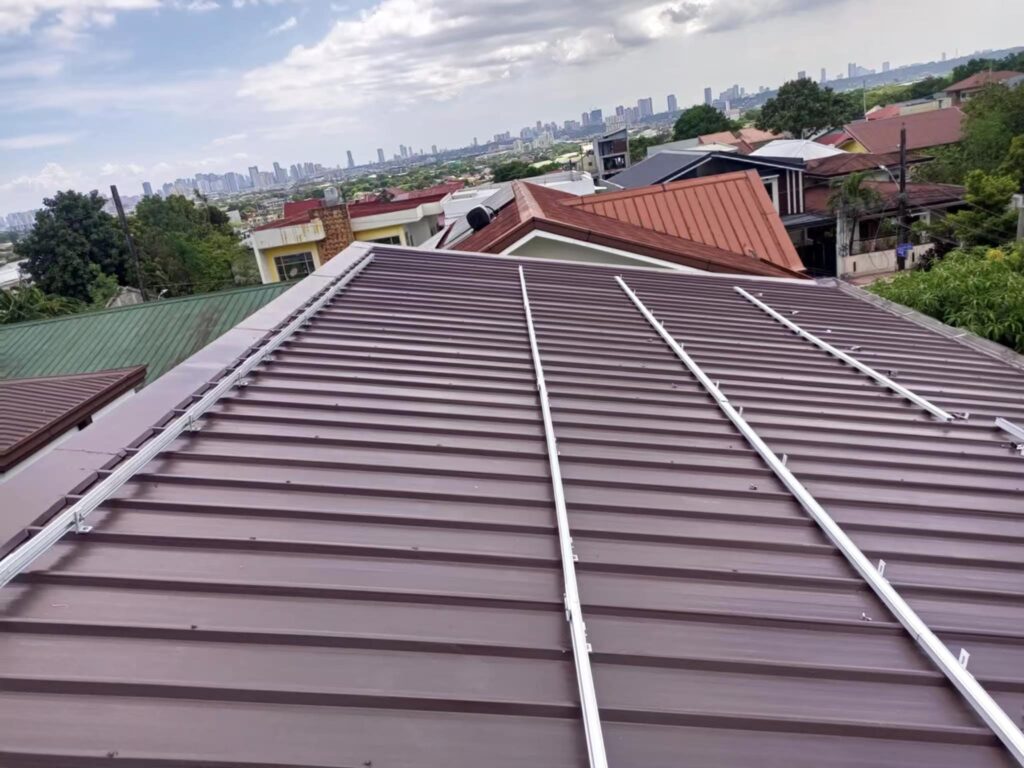

Why Your Solar Structure Matters
Solar mounting brackets are more than hardware—they determine how successfully a solar project performs long-term. The proper mounting system extends years a solar setup’s life. We witness this all around the world on a daily basis.
On a coastline with salt spray, or desert sites with sand and wind, the wrong bracket = fast corrosion + early failure. Our C channel steel brackets, hot-dip galvanized or Zn-Al-Mg coated, keep rust at bay and stay strong for decades, even when the weather turns nasty.
Mounting brackets aren’t just panel-holders. They assist in optimizing solar exposure. If your panels aren’t properly installed, they lose power.
With proper racking, panels sit at a 90 degree angle to the sun, which can increase energy by as much as 40%. A few systems even allow you to modify the tilt with the seasons. So you get more juice, less loss and a system that performs at its peak all year round.
Because the solar structure is a huge cost driver, a good mounting system cuts costs too. Panels need to stay put in storms, high winds or snow. For example, if the brackets bend or break, you are responsible for the repairs or replacements.
Our structures are designed to withstand winds of up to 60 m/s and snow loads of 1.4 kN/m2. That protects panels and controls costs over the 25-year lifespan of most solar installs. The mounting itself is only around 10% of the overall project cost, but the wrong decision can cause far greater losses.
There is no such thing as a typical site. Roof shape, ground type, local weather all play a role. That’s why we provide modular, pre-assembled systems for flat roofs, sloped roofs, or ground mounts.
A smooth, form-fitting bracket not only looks nicer, but it requires less labor to install and won’t harm the roof. Bad design or low quality materials can cause leaks or void a roof’s warranty.
We test according to ISO 9001 standards to verify our products provide a perfect fit, durability, and protect our customers’ warranties.
Choosing The Right Solar Mounting Bracket
Choosing the right mounting bracket is a fundamental step for any solar project. We understand this decision determines not only the system’s longevity, but its security and overall price. Choosing the right bracket should depend on your roof, your climate, and the size of your solar setup.
We view the right bracket as a long-term investment—what supports the panels needs to last as long as the panels.
1. Roof Type
Sloped roofs require brackets that conform to the pitch for secure attachment, whereas flat roofs frequently necessitate ballasted or tilt-adjustable mounts to achieve proper angling. Our C channel steel brackets fit both, helping panels find the 90-degree sunlight sweet spot.
Roofing material is important as well—metal, tile and asphalt roofs require their own unique brackets and fasteners. Old or weak roofs might require additional inspections or fortifications before a panel is installed. We always recommend putting a strong focus on the roof’s age and strength first.
2. Climate Conditions
Brackets weather all kinds of storms. Living in a windy area or an area that experiences snow accumulation, our hot-dip galvanized steel brackets ensure your panels stay put.
We rate them for 60 m/s wind speeds and snow loads approaching 1.4 kN/m2. UV rays and rain accelerate rust, so we use Zn-Al-Mg coatings for enhanced corrosion resistance. For locations with large temperature variations, we recommend brackets that accommodate expansion and contraction without warping or fracturing.
3. System Scale
A tiny home rooftop installation and a large commercial field array require different answers. For the home, space is at a premium and aesthetics could be more important, so low-profile, pre-assembled brackets assist.
For big projects, modular ground-mount frames make scaling up quick and simple. Our systems come built for both, with shared-rail solutions for large projects to reduce hardware and cost. We always discuss future plans up front so the system expands as necessary.
4. Material Science
Steel, aluminum and stainless steel all have their own trade-offs. We favor hot-dip galvanized Q235/Q345 steel for the optimal combination of cost, strength, and rust resistance.
Aluminum is light and non-rusting, but more expensive. Stainless steel is robust but heavy and pricey. Our brackets are engineered to withstand the outdoors for years, with durable coatings that reduce maintenance.
We consider how each material affects the planet, from manufacturing to recycling.
5. Industry Standards
Local rules count. We adhere to Eurocodes, Australia’s NCC and other codes to ensure our products are a fit for global markets.
All our brackets undergo CE and SGS tests so buyers can rely on the specs. We stay on top of new solar tech and revised standards, and we collaborate with project engineers to confirm each design complies with the correct codes.
Exploring Solar Mounting Bracket Types
Solar mounting brackets are the foundation of any PV installation, yet selecting the correct type can make or break a project’s long-term performance and expense. Because solar panels rarely come with brackets, buyers have to consider the tradeoffs of diverse mounting designs — each providing specific benefits based on location, project scale and local weather requirements.
Fixed-Tilt
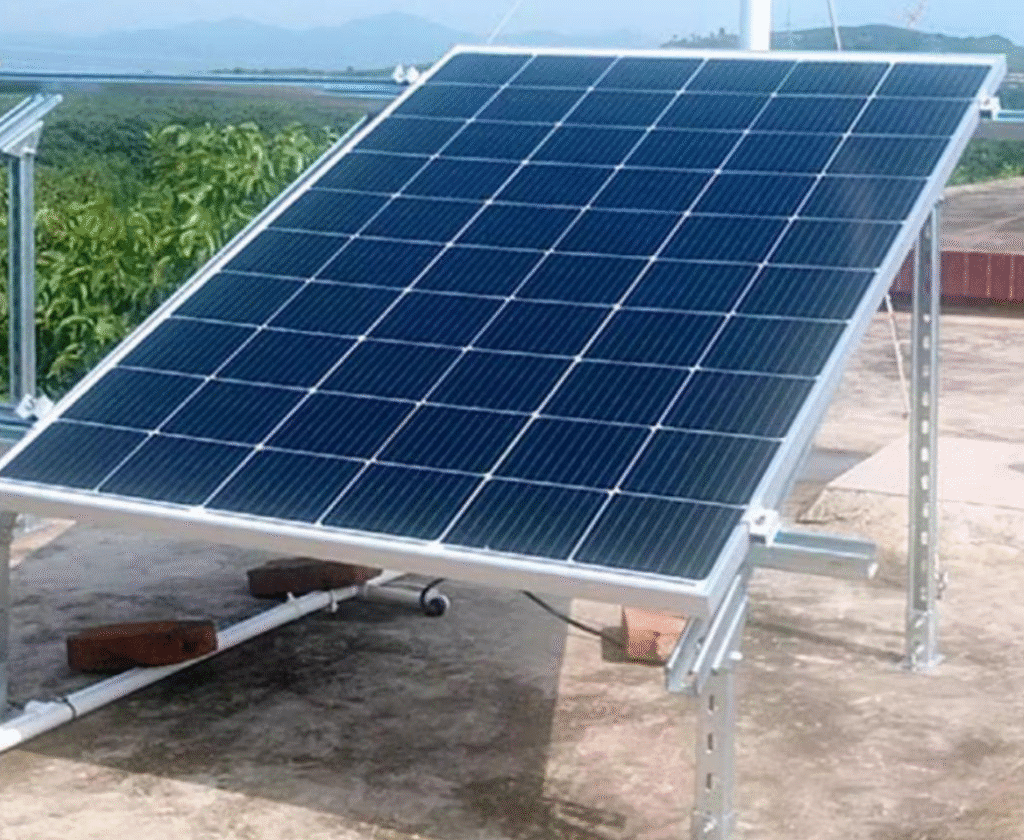
Fixed-tilt mounting systems are notable for their simplicity, affordability, and convenience. This makes them the default selection for budget-concerned projects or where elevated wind or snow loads call for additional sturdiness. Typically, most fixed-tilt brackets are made of hot-dip galvanized Q235 steel or Zn-Al-Mg coated steel, providing robust protection against corrosion even in the most extreme conditions.
Our proprietary C channel steel structures are designed for rapid shipping and can be pre-assembled to help reduce installation time. Fixed-tilt brackets don’t allow you to switch panel angles, so there’s less opportunity to capture peak sun throughout the year. That is, energy output is determined by the install angle you choose.
For optimal efficiency, we suggest figuring out the ideal tilt based on your latitude—generally between 10° and 40°—to strike a compromise between the summer and winter sun. Installers love fixed-tilt systems because they’re easy to install with fewer moving parts, which means less hassle in the future. Cleaning and checks are easy, requiring mere maintenance.
Adjustable-Tilt
Adjustable-tilt brackets allow you to change panel angles a handful of times annually to track the sun. This equates to more output in the spring and fall, when sun angles are shifting rapidly. These mounts employ simple hinges, slots or locking pins for manual adjustments, making them a clever step-up from fixed-tilt.
They do introduce additional moving parts, leading to more maintenance and inspections down the line. The power boost — up to 10-15% more in some instances — can make the additional effort worthwhile, particularly in locations with pronounced seasonal sun variations.
Ballasted
Ballasted mounting systems are ideal for flat roofs or open ground where drilling is prohibited. Heavy frames or concrete blocks secure the panels, so there’s no chance of leaks or roof damage. This architecture is common for big housetops, automobileports or landfills.
Ballast weight has to be precisely correct to remain safe in wind or storms. Our steel ballasted racks can be installed quickly on numerous surfaces, giving them a versatile option for challenging sites. Remember, not all roofs can bear the additional weight, so a site inspection is crucial.
Ground-Mount
Ground-mount systems really shine on bigger projects with room to spare. They’re accessible for cleaning, repairs, or upgrades. Installers can adjust the tilt and height to accommodate sun or snow requirements. With hot-dip galvanized steel frames, these systems handle harsh climates and big arrays.
However, they require more land than roof mounts. For farms or utility scale jobs, ground mounts provide premium output and long-term savings.
The Unseen Forces on Your Solar Structure
Every solar bracket we send out is constructed thinking about the real-life forces it will encounter. Solar systems withstand more than sunlight—they battle against the forces of wind, weight and thermal expansion and contraction all while complying with local codes and international standards. Our C channel steel designs, particularly hot-dip galvanized, are built to last. Here’s how we combat the unseen forces on your solar structure.
Wind Load
Wind is the number one risk for any solar installation. We always begin with precise wind load calculations for every location, utilizing local wind velocity data and elevation. That’s how we rate our brackets—numerous of our ground-mounts are rated for wind speeds up to 60 m/s, a necessity on storm or cyclone-prone sites.
It’s more than just selecting a healthy bracket. We employ design hacks—low-profile arrays, tight module spacing and firm anchoring—to reduce wind uplift and protect panels from gusts. Periodic inspections are crucial. Our coastal clients do routine inspections, keeping an eye out for bolt loosening or bracket fatigue following storms.
Weight Distribution
Solar structures experience more than their own weight. Snow, rain and even dust can accumulate, straining mounts. We never forget to verify that our brackets support not only static weight but dynamic loads, such as heavy snow or fierce winds. Q235 and Q345 steel grades provide us a generous safety margin.
Weight distributed even halts stress points and maintains the entire array. In design, we employ rail configurations and clamp placements that accommodate both framed and frameless modules. This aids rapid installs as well—our factory-assembled brackets reduce field labor and shorten install time.
Some clients in snowy regions even request extra reinforcements, so their arrays don’t sag or give out after a blizzard.
Thermal Expansion
Temperature swings can cause steel and aluminum to expand or contract. If the design doesn’t allow this, mounting brackets can warp, crack, or loosen over time. We select materials and coatings — such as Zn-Al-Mg — that withstand heat and cold, and remain durable after years in the elements.
Our brackets provide sliding slots and flexible joints. These allow the frame to shift slightly when temperatures fluctuate, but mechanically fasten panels secure. We recommend that our customers seek stress indicators—such as tiny fractures in the vicinity of bolt holes—during upkeep, particularly in regions with significant daily temperature fluctuations.

Engineering for the Unexpected
Solar panels can be subject to hail, falling tree branches, or even minor earthquakes. We deploy ISO 9001-certified process to introduce a safety margin for these infrequent loads.
Additional checks in design and on the production line assist us identify weak points. We rely on worldwide standards—such as CE and SGS—so our brackets clear third-party testing.
Brackets have to endure more than sun and rain.
Installation Best Practices
Each house comes with a trusted solar mounting bracket system that safeguards panels from extreme heat, snow and winds. For lasting performance and peace of mind, we apply a rigorous process that includes site evaluation, equipment inspection, sealing, torque, and maintenance. It’s what enables us to provide quality every time, and deliver the level of service that global EPC contractors, procurement managers, and project engineers expect.
Pre-Installation Check
All work projects begin with a comprehensive site survey. We consider roof or ground conditions, shade, tilt, and access. If a roof is not the right size or faces north, a ground mount may be best. Ground mounts provide us with greater flexibility to select optimal areas for solar production.
We ensure our C channel steel brackets are compatible with the panel type and the roof/site structure. We don’t want mismatches that could endanger the system. We always make sure we have all permits and clearances before we unload materials. No time is squandered later.
Before we start, we dust, leaf or waste off of their work areas. This facilitates moving tools and panels and avoids slippage or damage.
Proper Sealing
Water leaks are a huge concern with any flashing system. We apply sealants designed for hot, cold and wet environments—typically a high quality silicone or polyurethane. These keep water where it belongs – out – at every penetration our brackets make through roofs or other surfaces.
We examine seals for wear and cracks during each inspection. We replace seals if they appear aged or fragile. We install nothing but products that meet or exceed local building codes.
Torque Specifications
We adhere to our factory’s torque specifications for each bolt. If a bolt is too loose, the entire thing is in danger. If it’s too tight, it can crush the bracket or panel frame. We use torque wrenches that are inspected and adjusted to the appropriate setting.
All torque are documented and stored for future inspections. It helps us monitor work quality and stay on top of standards.
Routine Maintenance
We schedule periodic inspections and maintenance. We inspect for rust, loose bolts, or grime that could damage the mounts. If it looks bad we make it right – fast.
We maintain every joint nice and tight and clean. Little problems are addressed before they expand.
Beyond The Bracket: A Holistic View
Solar mounting brackets are only a piece of the puzzle. We don’t view a solar system as just a collection of panels, inverters, storage and mounting hardware. It isn’t simply about selecting a winning bracket. It’s understanding how each part contributes to the entire arrangement.
Our C channel steel structures, precision cut and shaped in-house, are constructed for durability and years of wear. They work for both rooftop and ground mounted projects, which really makes them a rock-star choice for a lot of installs.
When we consider a project we consider how the bracket, panel, and inverter all interrelate. A weak bracket can gum up the job, waste time, or even cause trouble down the line. For instance, certain users discover that thin brackets, such as 1/16 or 1/8 inch brackets, bend or don’t survive in high winds.
That’s why we use Q235 or Q345 steel, and we spray it with hot-dip galvanizing or Zn-Al-Mg to resist corrosion. This is vital for extended wear outside, where rain, snow, and sun all put each piece to the test. Our pre-fab, modular designs make a difference for EPC teams. They reduce install time and simplify shipping, as well.
In markets such as South Africa or Brazil, where huge teams manage bulk installs, quick build is essential. We listen to real issues from the trenches. After all, sometimes a bracket won’t allow you to stash the prop bar.
Or you have to notch a bar to accommodate a bolt, which compromises the entire mount. We’re here to change that up with easy, robust designs—rails with pre-cut slots and clamps that operate with typical tools. Knobs and wingnuts, for example, can be difficult to secure with only two hands.
We use pre-assembled bolts and even provide rivnut options to make things slicker. Tilt adjustment, which is hard work, becomes easier with our quick change brackets.
Planning forward is equally so. We configure our systems so you can add new panels or replace components as your requirements evolve. Which is to say, using industry standard sizes, readily available components, and transparent processes.
We strive for greener means to construct and ship, employing bulk packaging to reduce waste and expenses.
Conclusion
We view each solar mounting bracket as a tangible element of your energy strategy. We construct them all to withstand heavy wind and support substantial snow loads. Our steel supports endure, toiling in sun, rain and dust. We know what’s important—easy installation, rock-solid hold and components that click together perfectly, every time. Big mount or small, rooftop or ground mount, we have models designed for your requirements. Solar oughta work slick n last. That’s the pledge we deliver to every job. Ready to see transparent pricing or request a custom proposal? Contact us for complete information or a complimentary design. Let’s construct your next solar gig together.
Frequently Asked Questions
What is a solar mounting bracket?
A solar mounting bracket is a kind of support. We utilize it to mount solar panels to roofs, the ground, or other surfaces. It provides stability and sunshine-optimization for panels.
Why is it important to select the right solar mounting bracket?
Selecting the appropriate bracket enhances security and productivity. We make sure our brackets align with your panel type, surface and environment. This keeps your solar system running strong longer.
What types of solar mounting brackets are available?
We have roof mounts, ground mounts, pole mounts and adjustable brackets. Each kind accommodates different installation requirements and site conditions.
How do weather and wind affect solar mounting brackets?
Weather and wind can strain brackets. Speaking of resistance, we engineer our brackets to withstand high winds, hard rain, and temperature extremes. This ensures your solar panels stay secure and safe year-round.
Can we install solar mounting brackets ourselves?
Most brackets are easy to install. We do advise professional installation for safety, proper alignment and durability.
Are solar mounting brackets compatible with all solar panels?
Most brackets fit standard panels. We assist you in selecting the appropriate bracket by verifying the panel’s size, weight, and mounting surface. Of course, compatibility makes for a rock solid installation.
What maintenance do solar mounting brackets require?
We recommend periodic checks for loose bolts or corrosion. Keeping debris cleared away assists in maintaining strength. With a little care you keep your solar mounting system safe and efficient.
