 跳到内容
跳到内容 As solar energy adoption accelerates worldwide, the importance of reliable and efficient solar panel mounting brackets—commonly called solar brackets—has never been greater. These structural components are essential for securely fixing solar panels to various surfaces, ensuring stability, optimal sunlight exposure, and longevity of the solar power system. This comprehensive article explores the different types of solar panel mounting brackets, their materials, features, and applications, providing you with expert insights to make informed decisions for your solar projects in 2025.
We also highlight why choosing high-quality materials like C-channel steel, available from C-Channel Steel, can significantly enhance the durability and performance of your solar mounting systems.


- Introduction: Why Solar Panel Mounting Brackets Matter
- Core Functions and Features of Solar Brackets
- Classification of Solar Panel Mounting Brackets
- By Material
- By Installation Method
- By Application/Purpose
- By Structural Design
- Common Types of Solar Panel Mounting Brackets
- Roof Mounting Brackets
- Ground Mounting Brackets
- Suspended and Floating Brackets
- Tracking Brackets (Adjustable and Automatic)
- Materials Used in Solar Brackets: Pros and Cons
- Installation Considerations and Best Practices
- Comparison Table of Solar Bracket Types and Features
- Why Choose C-Channel Steel for Solar Brackets
- Conclusion
1. Introduction: Why Solar Panel Mounting Brackets Matter
Solar panel mounting brackets are the backbone of any photovoltaic (PV) system. They connect solar panels to roofs, ground structures, or poles, providing the necessary mechanical support to withstand environmental forces such as wind, snow, and seismic activity. A well-designed solar bracket system ensures:
- Stability and security of solar panels
- Optimal tilt and orientation for maximum solar energy capture
- Prolonged lifespan of the solar installation
- Protection against corrosion and weather damage
- Flexibility to adapt to different roof types and terrains
Without proper mounting brackets, solar panels risk damage, reduced efficiency, and costly repairs.
2. Core Functions and Features of Solar Brackets
The primary functions of solar mounting brackets include:
- Stable Support: Securely anchor solar panels to prevent displacement during storms or heavy winds.
- Angle Optimization: Adjustable brackets allow setting the tilt angle to maximize sunlight exposure based on geographic location and season, improving energy yield by 15-25%.
- Corrosion Resistance: Use of durable, weather-resistant materials to withstand harsh outdoor conditions.
- Ventilation: Maintain proper spacing between panels and mounting surfaces to avoid moisture buildup and overheating.
- Installation Flexibility: Compatibility with various installation surfaces such as pitched roofs, flat roofs, ground, and poles.
3. Classification of Solar Panel Mounting Brackets
Solar brackets can be classified in multiple ways depending on material, installation method, purpose, and structure.
By Material
- Hot-Dip Galvanized Steel Brackets: Excellent corrosion resistance, suitable for diverse environments, especially industrial and large-scale projects.
- Aluminum Alloy Brackets: Lightweight and corrosion-resistant, ideal for residential rooftops but with moderate load capacity.
- Magnesium-Aluminum-Zinc Alloy Brackets: Combines strength and corrosion resistance, suited for coastal and harsh environments.
- Stainless Steel Brackets: Highly durable and corrosion-resistant, used in highly corrosive or marine environments.
- Concrete Brackets: Heavy, stable, mainly for large solar farms and ground installations.
By Installation Method
- Fixed Brackets: Non-adjustable, fixed-angle mounts including roof brackets (pitched, flat), ground brackets, and water brackets.
- Adjustable Inclination Brackets: Manually or mechanically adjustable to change tilt angle seasonally.
- Automatic Tracking Brackets: Single-axis or dual-axis tracking systems that automatically follow the sun to maximize energy capture.
By Application/Purpose
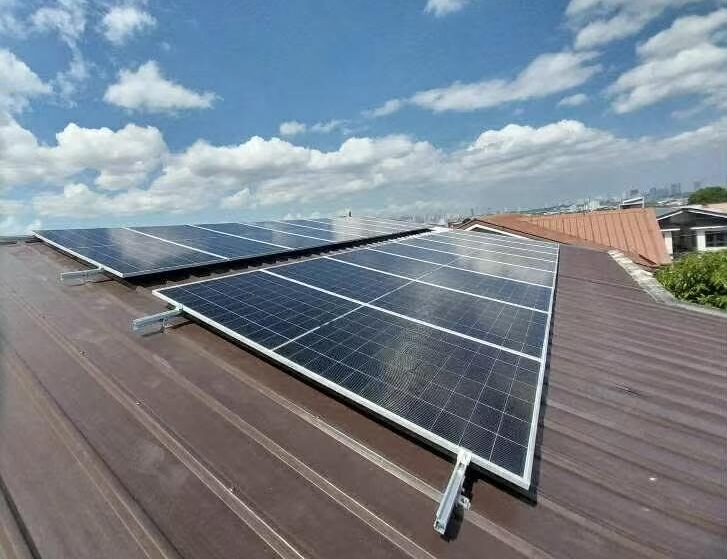
- Roof Brackets: Designed for residential and commercial buildings; includes pitched roof brackets, flat roof brackets, and building-integrated photovoltaics (BIPV) brackets.
- Ground Brackets: For open areas, solar farms, and agricultural land; includes single-column, double-column, and pile-driven ground brackets.
- Surface/Suspended Brackets: Floating brackets for water surfaces and suspended brackets for urban facades or bridges.
By Structural Design
- Single-Column Brackets: Simple structure, suitable for uneven terrain.
- Double-Column Brackets: Provide uniform load distribution, ideal for flat terrain.
- Arbour Brackets: Combine solar panel support with shading functions, suitable for multifunctional urban spaces.
4. Common Types of Solar Panel Mounting Brackets
Roof Mounting Brackets
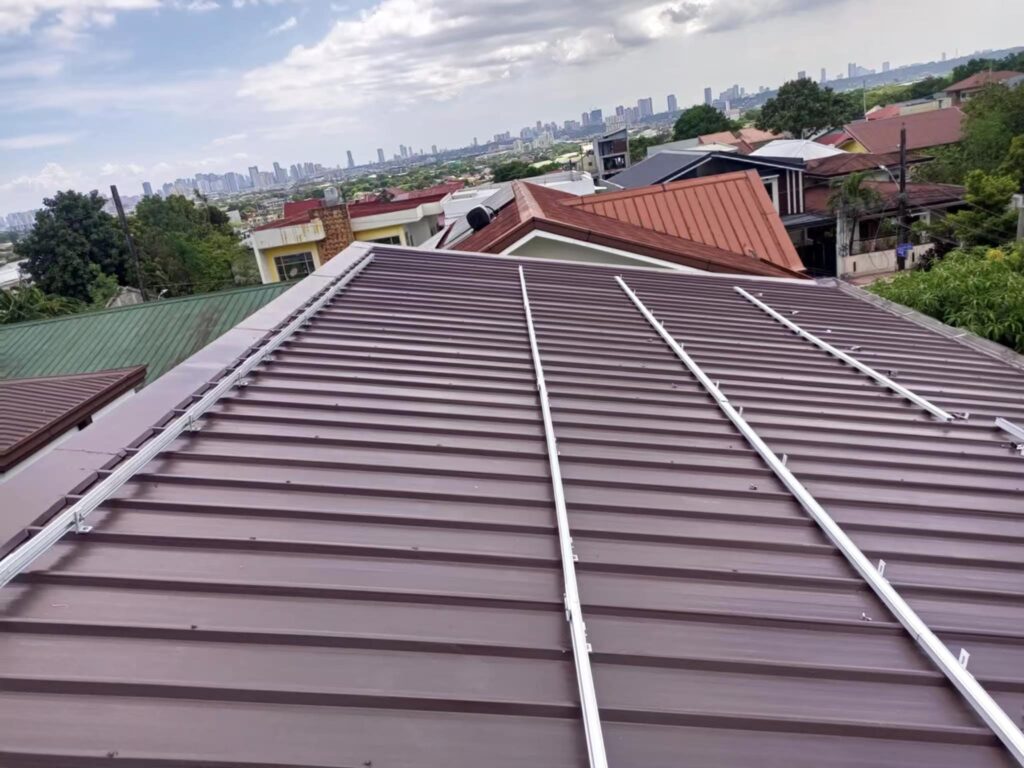
- Pitched Roof Brackets: Designed to fit the slope of angled roofs, often custom-cut to roof angle for flush mounting.
- Flat Roof Brackets: Usually tilted mounts or ballasted systems that do not penetrate the roof membrane, protecting waterproofing layers.
- BIPV Brackets: Integrate solar panels directly into building materials such as facades or skylights.
Ground Mounting Brackets
- Single-Pillar Brackets: Simple and cost-effective, suitable for small to medium installations.
- Double-Pillar Brackets: Provide better stability for larger arrays.
- Pile-Driven Brackets: Anchored deep into the ground for high stability in soft soils.
Suspended and Floating Brackets
- Suspended Brackets: Used on building facades or bridges, maximizing sunlight without occupying ground space.
- Floating Brackets: Installed on water bodies, reducing land use and improving cooling efficiency.
Tracking Brackets
- Single-Axis Trackers: Rotate panels on one axis to follow the sun east to west.
- Dual-Axis Trackers: Adjust tilt and rotation for maximum solar exposure throughout the day and year.
5. Materials Used in Solar Brackets: Pros and Cons
| Material | Advantages | Disadvantages | Typical Applications |
|---|---|---|---|
| Hot-Dip Galvanized Steel | Strong, durable, corrosion-resistant | Heavier, may require professional installation | Commercial, ground mounts, harsh environments |
| Aluminum Alloy | Lightweight, corrosion-resistant, easy to install | Lower load capacity, more expensive | Residential rooftops, lightweight systems |
| Magnesium-Aluminum-Zinc Alloy | High corrosion resistance, self-healing properties | Requires maintenance, moderate cost | Coastal areas, salt spray environments |
| Stainless Steel | Exceptional corrosion resistance, very durable | High cost, heavy, difficult to fabricate | Marine environments, extreme conditions |
| Concrete | Very stable, supports large arrays | Heavy, less flexible, labor-intensive | Large-scale solar farms, ground mounts |
| C-Channel Steel | Strong, versatile, cost-effective, easy fabrication | Requires protective coatings against rust | Rooftop and ground mounts, industrial use |
6. Installation Considerations and Best Practices
- Site Assessment: Evaluate roof type, structural integrity, shading, and local weather conditions.
- Material Selection: Match bracket materials to environmental conditions for longevity.
- Load Calculations: Ensure brackets can handle snow loads, wind pressure, and panel weight.
- Waterproofing: Use flashing and sealants on roof penetrations to prevent leaks.
- Ventilation: Maintain adequate spacing between panels and mounting surfaces to prevent overheating and moisture damage.
- Regulatory Compliance: Obtain permits and follow local building codes.
7. Comparison Table of Solar Bracket Types and Features
| Bracket Type | Material Options | Application | Adjustable Tilt | Corrosion Resistance | Installation Complexity | Typical Lifespan | Cost Range |
|---|---|---|---|---|---|---|---|
| Pitched Roof Brackets | Aluminum, C-Channel Steel | Residential rooftops | Usually fixed | High | Medium | 25-30 years | Medium |
| Flat Roof Brackets | Aluminum, Galvanized Steel | Commercial rooftops | Adjustable | High | Medium | 20-25 years | Medium-High |
| Ground Mount Brackets | Galvanized Steel, Concrete | Solar farms, open land | Fixed/Adjustable | Very High | High | 20-30 years | High |
| Suspended Brackets | Stainless Steel, Aluminum | Facades, bridges | Fixed | Very High | High | 25+ years | High |
| Single-Axis Trackers | Galvanized Steel, Aluminum | Large-scale systems | Automatic | High | Very High | 15-20 years | Very High |
| Dual-Axis Trackers | Galvanized Steel, Stainless Steel | Utility-scale systems | Automatic | Very High | Very High | 15-20 years | Very High |
8. Why Choose C-Channel Steel for Solar Brackets
At C-Channel Steel, we specialize in manufacturing robust, cost-effective C-channel steel solar brackets tailored for diverse solar applications. Our steel brackets provide:
- Superior Structural Strength: Ideal for both rooftop and ground installations, supporting heavy loads and extreme weather.
- Custom Fabrication: Easily customized to fit unique project specifications.
- Corrosion Protection: Coated with advanced anti-rust treatments to extend lifespan.
- Cost Efficiency: Competitive pricing with no compromise on quality.
- Ease of Installation: Designed for straightforward assembly, reducing labor costs.
Choosing C-channel steel brackets ensures your solar panels are mounted on a reliable, long-lasting foundation, maximizing energy production and return on investment.
9. Conclusion
Solar panel mounting brackets are a critical component of any photovoltaic system. Their types, materials, and features directly impact the stability, efficiency, and durability of your solar installation. Whether you are installing on a pitched roof, flat roof, ground, or even suspended surfaces, selecting the right solar bracket type and material is essential.
In 2025, advancements in materials such as galvanized steel, aluminum alloys, and specialized coatings have greatly improved bracket performance. Among these, C-channel steel stands out as a versatile and robust choice, especially for projects demanding strength and longevity.
For reliable, high-quality solar brackets tailored to your needs, consider partnering with C-Channel Steel, a trusted provider in the solar mounting industry.
This article draws on the latest industry insights and classifications from sources including Zeoluff and other expert solar mounting guides, ensuring you receive up-to-date and practical information for your solar projects.
If you need a detailed consultation or custom solar bracket fabrication, feel free to contact C-Channel Steel for professional support.
