 跳到内容
跳到内容 Steel C channels are among the most versatile and widely used structural steel products in construction, manufacturing, and industrial applications. Their unique shape, strength, and adaptability make them indispensable for a variety of projects, from building frameworks to vehicle chassis.
At Younaide Company, we specialize in supplying high-quality steel C channels with customizable sizes, thicknesses, and surface treatments to meet your exact needs. This article will provide you with an in-depth understanding of steel C channels, including their manufacturing process, types, applications, advantages, and comparisons with other steel profiles. A detailed comparison table is also included to help you make informed decisions for your projects.
What Are Steel C Channels?
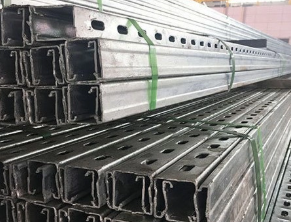
Steel C channels, also known as channel steel or simply C channels, are hot-rolled steel sections characterized by their distinctive “C” shaped cross-section. This shape consists of a wide vertical web and two parallel horizontal flanges. The web carries most of the shear forces, while the flanges provide bending resistance and stability.
The open profile of steel C channels makes them lightweight yet strong, ideal for structural support where load-bearing capacity and rigidity are required without excessive weight.


How Are Steel C Channels Made?
Steel C channels are typically manufactured through a hot rolling process. In this process:
- Steel billets or slabs are heated to high temperatures.
- The heated steel is passed through a series of rollers that shape it into the desired C profile.
- The formed steel channel is then cut to required lengths.
This method is efficient and cost-effective, allowing mass production of steel C channels with consistent quality. After rolling, channels may undergo additional fabrication such as:
- Galvanizing for corrosion resistance.
- Drilling or punching for bolt holes.
- Welding or cutting for custom assemblies.
Younaide offers all these customization options to deliver steel C channels tailored to your project specifications.
Types of Steel Channels
Steel channels come in various types based on shape, flange design, and application. The most common types include:
| Type | Description | Typical Use Cases |
|---|---|---|
| C Steel Channel | Features two parallel flanges and a vertical web; the most common channel type. | Structural supports, building frames, trailers |
| U Steel Channel | Similar to C channel but with tapered flanges instead of parallel ones. | Architectural applications, framing |
| Z Steel Channel | Shaped like the letter “Z”; used mainly as purlins in roofing and siding. | Roof framing, wall supports |
| Hat Channel | Has two horizontal outward flanges and two vertical flanges, resembling a “hat” shape. | Roof framing, ceiling grids |
| J Steel Channel | One flange longer than the other; often used for trim or edge finishing. | Window and door trims, siding attachments |
Younaide primarily focuses on supplying C steel channels due to their strength, versatility, and broad applicability.
Why Steel is the Best Material for Channels
Steel is the preferred material for channels because of its:
- High strength and toughness: Steel can withstand heavy loads and resist deformation.
- Durability: It resists wear, abrasion, and impact.
- Resistance to environmental factors: When properly treated, steel channels resist corrosion, moisture, and chemicals.
- Cost-effectiveness: Steel channels offer an excellent balance of performance and price.
- Fabrication ease: Steel is easy to cut, weld, drill, and shape.
These properties make steel channels ideal for demanding structural and industrial applications.
Common Applications of Steel C Channels
Steel C channels are used extensively across industries due to their strength and adaptability:
- Building and Construction: Used as beams, columns, purlins, girts, and wall studs to support vertical and horizontal loads.
- Roofing Systems: Serve as rafters or bridging members to support roof decks.
- Vehicle Manufacturing: Form chassis and frames for trailers, trucks, and recreational vehicles.
- Industrial Equipment: Support conveyor systems, cranes, and machinery.
- Infrastructure: Used in bridge trusses, guardrails, and highway barriers.
- Residential Projects: Frame doors, windows, stairs, and decks.
Younaide’s steel C channels are tailored to meet the specific load and dimensional requirements of these applications.
Advantages of Using Steel C Channels
- High Load-Bearing Capacity: The shape and thickness provide excellent resistance to bending and shear.
- Versatility: Suitable for both light and heavy-duty applications.
- Cost Efficiency: Manufactured in large volumes with minimal waste.
- Customization: Easily fabricated to fit project-specific needs.
- Corrosion Resistance: Can be galvanized or coated for outdoor use.
- Sound and Vibration Dampening: Thick steel channels absorb noise and vibrations, improving structural comfort.
Comparison: Steel C Channel vs. Other Steel Profiles
To better understand the benefits of steel C channels, here is a detailed comparison with other common steel profiles:
| Feature / Profile | Steel C Channel | Steel Angle Iron | Steel Square Tubing |
|---|---|---|---|
| Cross-Section Shape | U-shaped with parallel flanges | L-shaped with two legs at 90° | Hollow square or rectangular |
| Flange Thickness | Thicker flanges provide strength | Thinner flanges | Uniform wall thickness |
| Load-Bearing Capacity | High bending and shear strength | Moderate strength | High torsional and bending strength |
| Weight | Moderate to heavy | Lighter | Heavier than channel |
| Typical Applications | Beams, columns, heavy frames | Bracing, light frames | Structural tubing, fencing |
| Fabrication Ease | Easy to cut, weld, drill | Very easy to fabricate | Requires precise welding |
| Cost | Moderate | Lower cost | Higher cost |
| Corrosion Resistance | Can be galvanized or painted | Same as channel | Same as channel |
Standard Sizes and Classifications of Steel Channels
Steel channels are categorized and sized using widely recognized international standards, with the most common classifications being C channels and U channels—each defined by its flange style and profile.
Key Standards:
- UPE (European Parallel Flange Channels): These refer to C channels with parallel flanges, commonly used throughout Europe and specified according to the EN 10365 standard.
- UPN (European Tapered Flange Channels): U channels feature tapered flanges and are also defined under EN 10365. In North America, these may be denoted by ASTM A36 or ASTM A572 standards.
Size Ranges:
- Web Height: Channel depths typically range from 40 mm (1.5 in) to over 400 mm (16 in), fitting a variety of load requirements.
- Flange Width: Flanges may range from approximately 20 mm (0.8 in) to more than 100 mm (4 in), depending on the profile type.
- Thickness: Web and flange thicknesses can also vary, allowing for different strengths and structural roles.
Channels are often referred to by their “web height × flange width × thickness” (for example, C100×50×6), with sizes standardized by organizations like ASTM, EN, JIS, and GB. For specialized applications, custom sizes and shapes are available—Younaide is able to fabricate bespoke steel channels tailored precisely to your project requirements.
This standardized approach ensures compatibility and interchangeability whether you’re building a warehouse in Chicago or a bridge in Berlin.
Strength Comparison: Steel C Channels vs. I Beams and Wide Flange Beams
While steel C channels are robust and versatile, it’s important to note how their structural strength compares to other popular profiles like I beams and wide flange beams. The primary distinction lies in the geometry:
- C channels have a U-shaped cross-section, which means their bending strength is excellent when supported on the open face, but the design isn’t symmetrical. This makes them less efficient at resisting bending from multiple directions when compared to beams with a fully centered web.
- I beams and wide flange beams (such as those supplied by well-known brands like ArcelorMittal or Nucor) feature a symmetry centered on their web. This allows them to handle heavier loads and span longer distances without bending or twisting.
In summary, while C channels are ideal for many structural and framing applications, I beams and wide flange beams are generally chosen where maximum load-bearing capacity and rigidity are required—such as in major building frames, bridges, and heavy machinery bases. This distinction helps ensure you select the right profile for both safety and efficiency in your next project.
How Surface Treatments Protect Steel C Channels from Corrosion
Steel C channels, like any steel product, are naturally susceptible to rust and corrosion when exposed to moisture, chemicals, or harsh environments. That’s where surface treatments step in as the steel’s first line of defense. The most common protective options include:
- Hot-dip galvanizing: This method coats the steel with a robust layer of zinc. The zinc forms a protective barrier and, even if the surface is scratched, it continues to guard the steel underneath by corroding in place of the steel (a process called sacrificial protection). Galvanized C channels are ideal for outdoor or high-moisture settings, much like how a raincoat keeps you dry during a storm.
- Primers and paint: Applying a primer or a specialized paint creates a seal that keeps moisture and oxygen away from the steel. Primed and painted channels are often used indoors or where cosmetic appearance matters, since you can choose custom colors to match your project.
- Powder coating: This treatment covers the steel in a thick, uniform layer of polyester or epoxy powder, which is then cured under heat. The result? A tough, durable finish that resists scratches, chemicals, and weather—just like the armor on a superhero.
Choosing the right surface treatment ensures your steel C channels remain strong, reliable, and corrosion-free, even when the elements don’t cooperate.
How to Choose the Right Steel C Channel Size
Choosing the correct size depends on:
- Load requirements: Heavier loads require channels with thicker webs and flanges.
- Span length: Longer spans need stronger channels to reduce deflection.
- Application type: Structural vs. non-structural uses.
- Environmental conditions: Outdoor use requires corrosion-resistant coatings.
Younaide’s technical team can assist in selecting the optimal size and grade for your project.

Processing and Customization Services at Younaide
Younaide offers a full range of processing services to ensure steel C channels meet your exact requirements:
- Cutting to length: Precise sizing to reduce waste.
- Drilling and punching: For bolt holes and assembly.
- Welding and fabrication: Custom assemblies and frames.
- Bending and rolling: For curved or angled structures.
- Surface treatments: Galvanizing, painting, powder coating.
Our advanced equipment and experienced staff guarantee high-quality results.
Proper Handling and Storage of Steel C Channels
To maintain quality and longevity:
- Store in dry, covered areas to prevent rust.
- Stack horizontally with supports to avoid bending.
- Use protective coatings or packaging during transport.
- Regularly inspect stored materials for damage.
Younaide adheres to strict storage protocols and advises clients on best practices.
Summary Table: Steel C Channel Key Features and Applications
| Feature | Description | Typical Uses |
|---|---|---|
| Material | Hot-rolled carbon steel, optionally galvanized | Structural beams, vehicle frames, industrial supports |
| Cross-Section | U-shaped with parallel flanges and vertical web | Building frames, roofing, trailers |
| Strength | High bending and shear resistance | Heavy-duty construction and manufacturing |
| Customization | Cutting, drilling, welding, bending, surface coating | Tailored to fit specific project needs |
| Corrosion Resistance | Galvanized or painted for outdoor durability | Outdoor structures, marine environments |
| Weight | Moderate to heavy, depending on size | Balanced strength-to-weight ratio |
| Fabrication | Easy to fabricate and assemble | Efficient construction and manufacturing |
Conclusion
Steel C channels are a versatile, strong, and cost-effective structural steel product essential for a wide range of applications. Their unique shape provides excellent load-bearing capacity and rigidity while allowing for easy fabrication and customization.
At Younaide Company, we offer premium steel C channels with extensive processing options and expert technical support. Whether your project involves construction, manufacturing, or infrastructure, Younaide’s steel C channels deliver reliable performance and value.
For more information or to request a quote, please visit:
http://www.strutcchannel.com
