 跳到内容
跳到内容 Introduction
As solar energy adoption grows rapidly across residential, commercial, and utility-scale markets, understanding the eligibility criteria for federal incentives like the Investment Tax Credit (ITC) becomes crucial. A key part of solar projects—including the often-overlooked but critical solar structures that support solar panels—must qualify under ITC rules to maximize financial benefits.
This article offers an exhaustive exploration of what kinds of solar structures are eligible for the ITC, shedding light on IRS guidelines, structural classifications, and practical implications for designers, developers, and buyers. It also highlights the role of companies like cchannelsteel.com, experts in supplying durable, code-compliant solar mounting structures that meet ITC requirements.
By discussing legislative background, technical definitions, case examples, and providing comprehensive tables, this detailed 4000-word article guides stakeholders to optimize solar project performance while securing maximum incentive value.

1. Understanding the Investment Tax Credit (ITC) and Its Importance
The Investment Tax Credit (ITC) is a generous federal incentive allowing solar project owners to receive a tax credit equal to a percentage of the eligible solar investment costs, including system equipment and installation. Originally established to accelerate clean energy deployment, the ITC remains vital to improving solar affordability.
- As of 2025, the base ITC rate is 30% for projects starting construction before 2034.
- ITC eligibility is not just about solar panels or inverters; structural components that form an integral part of the solar system can qualify.
- Proper structuring of the project and procurement choices can increase the credit amount.
2. Defining Solar Structures under ITC Eligibility
The IRS and Treasury Department guidelines clarify that structures holding solar panels may be eligible for ITC if the system is principally designed for electricity generation, and any other structural use is incidental.
Structural Components Typically Included
- Mounting racks and support frames
- Ground-mount foundations and piers
- Carport and canopy frames specifically designed to hold solar panels
- Pole mounts and tracking structure frameworks
Materials commonly comprise galvanized steel, aluminum alloys, and composite materials engineered to withstand environmental stressors.
What Excludes a Structure from ITC?
- Purely structural building elements not primarily intended to support solar (e.g., standard building roofs, walls without integrated solar).
- Elements whose function is primarily unrelated to the solar equipment (load-bearing but not supporting PV modules).
- Non-structural components like shading, landscaping, or outdoor furniture.
3. IRS Guidance and Exceptions
The IRS emphasizes that while regular structural components themselves generally don’t qualify for ITC, exceptions exist for those “so specifically engineered that it is in essence part of the machinery or equipment with which it functions.”
For example:
- Building-integrated photovoltaic (BIPV) elements such as solar windows, shingles, or facades providing both structural and energy-generating functions are eligible.
- Structures that combine dual usage but are primarily designed for solar panel support qualify.
4. Types of Solar Structures Eligible for ITC
4.1. Ground-Mount Solar Structures
Ground-mount mounting systems are the most common ITC-eligible structures in utility-scale and commercial solar arrays:
- Steel frameworks anchored into concrete footings.
- Engineered to optimize panel tilt and orientation.
- Durable and corrosion-resistant coatings.
4.2. Pole-Mounted Solar Structures
Solar panels mounted on single or multiple poles with appropriate footing qualify for ITC when primarily supporting the solar array.
4.3. Solar Carports and Canopies
Carport structures designed as parking cover systems that incorporate solar panels are eligible for ITC as ground-mounted solar structures.
4.4. Rooftop and Building-Mounted Racking
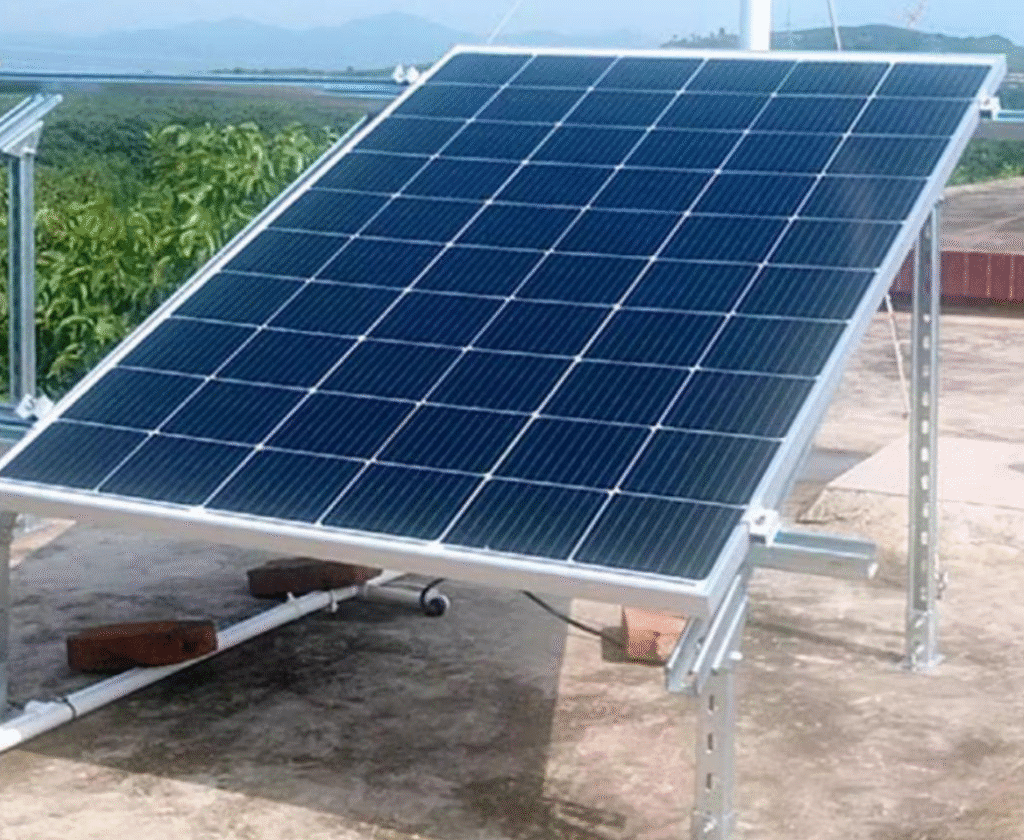
While the underlying building structure often is excluded, the racking systems specifically designed to hold solar panels on roofs qualify for the ITC.
Systems must be engineered to:
- Support solar array loads.
- Provide adequate spacing and tilt.
- Safely integrate with electrical wiring and modules.
4.5. Tracking Systems
Tracking mounts that orient panels dynamically to improve energy capture qualify as eligible structural equipment.
5. Cost Portions and ITC Impact of Solar Structures
The cost of solar structures generally accounts for 10-15% of total system costs, but the importance of their ITC eligibility is critical for maximizing credit.
Table: Approximate Cost Allocation and ITC Eligibility for Solar System Components
| Component | Average % of System Cost | Typically ITC Eligible? | Additional Notes |
|---|---|---|---|
| Solar Panels | 35–45% | Yes | Main energy producing equipment |
| Inverters | 10–15% | Yes | Convert DC to AC |
| Mounting Structures | 10–15% | Yes* | C-channel steel racks, tracking, carports |
| Electrical Components | 10–15% | Yes | Wiring, combiners, disconnects |
| Labor & Installation | 15–25% | Partially | Labor costs for mounting and wiring |
| Roof & Building Structure | N/A | No | Building itself usually excluded |
| Monitoring Systems | 2–5% | Yes | Control and monitoring electronics |
*Structures must be primarily designed for solar support to qualify.
6. Domestic Content Bonus and Structural Materials
Recent ITC updates introduce a domestic content 10% bonus—projects using 100% US-made steel and iron qualify for this additional credit. For steel-intensive components like mounting structures, this incentivizes sourcing from domestic suppliers such as cchannelsteel.com, which specializes in galvanized steel solar products.
7. Detailed Table of Eligible Solar Structures for ITC
| Solar Structure Type | Eligibility for ITC | Description | Typical Materials | Notes on Compliance |
|---|---|---|---|---|
| Ground-Mount Racking Systems | Yes | Steel frameworks supporting ground arrays | Galvanized Steel, Aluminum | Require engineering for site conditions |
| Pole-Mounted Structures | Yes | Panel supports fixed on poles | Steel/Aluminum | Must be load rated and corrosion protected |
| Carports and Solar Canopies | Yes | Dual-use panels and vehicle shelter structures | Steel framing | Increasingly recognized as ground-mounted |
| Roof-Mounted Racking | Yes | Specialized racks fixed to roofs | Steel/Aluminum Racks | Building itself excluded; racks must be specific to solar |
| Building-Integrated PV (BIPV) | Yes | Solar windows, facades integrated into building | Various | Dual function structure and generator |
| Tracking Mounts | Yes | Motorized structures aligning panels with sun | Steel mechanisms | Adds cost and maintenance |
| Non-Structural Building Elements | No | Roofs, walls, ceilings without solar function | Various | Not eligible |
8. Understanding the IRS “Primarily Designed” Clause
Structures must be primarily designed to hold solar panels for ITC eligibility. For example:
- Solar carports primarily function as shade and parking shelters but derive their credit eligibility from incorporating solar systems.
- Building rooftops that merely support solar panels but were constructed for other purposes do not qualify as structures for ITC.
This nuance affects which costs can be capitalized toward the ITC base.
9. Labor Requirements and Other ITC Conditions Affecting Structural Eligibility
Projects must meet labor standards regarding prevailing wages and apprenticeship criteria (especially large commercial projects) for full ITC qualification.
Structural components are also subject to:
- Documentation of costs.
- Proof of physical installation tied to the solar system.
- Meeting performance and quality standards.
Compliance with these factors ensures qualification of the structural portion of the ITC.

10. Importance of Solar Structures and ITC Eligibility to Project Economics
Qualified structural costs increase the base for ITC, improving cash flow and reducing upfront capital expenditure burden. Especially for large commercial and utility-scale projects with extensive racking, ITC eligibility on these components dramatically reduces payback periods.
11. Role of Quality Structural Providers Such as cchannelsteel.com
Selecting proven manufacturers for solar structures is key to:
- Guarantee corrosion resistance and structural integrity over decades.
- Ensure compliance with all applicable codes and tax incentive regulations.
- Benefit from domestic materials sourcing to capture bonus credits.
- Reduce costly structural failures and increase system uptime.
cchannelsteel.com provides galvanized steel solar mounting and tracking structures optimized for cost-effectiveness and ITC compliance.
12. Summary Table: Solar Structures Eligible for ITC and Related Details
| Structure Type | ITC Eligible? | Function | Typical Materials | Special Notes |
|---|---|---|---|---|
| Ground-Mount Racking | Yes | Support ground arrays | Galvanized steel, aluminum | Must be engineered for site conditions |
| Pole-Mount Structures | Yes | Elevated profile | Steel, aluminum | Tubular poles with concrete footers |
| Solar Carports | Yes | Parking shelter | Structural steel | Dual purpose; must incorporate PV panels |
| Roof-Mounted Racking | Yes | Rooftop mount | Metal racks, fasteners | Building excluded; racks integral to system |
| Building Integrated PV (BIPV) | Yes | Solar windows, facades | Various materials | Dual function (energy + building material) |
| Non-Structural Building Elements | No | Roofs, walls | Wood, concrete, steel | Not eligible for ITC |
| Tracking Systems | Yes | Active panel alignment | Steel frame + motors | Adds system complexity and cost |
Conclusion
The Investment Tax Credit (ITC) offers a substantial financial incentive for solar energy deployment, provided the system components—including solar structures—meet necessary eligibility requirements. Structures like ground-mount racks, pole mounts, carports, and roof racks designed primarily to hold solar panels qualify for ITC, while standard building elements do not.
Investing in quality, engineered, and code-compliant solar supporting steel structures is essential not only to ensure system durability but also to maximize financial returns by capturing all available federal tax credits.
cchannelsteel.com specializes in manufacturing galvanized steel solar structures optimized for performance, cost, and ITC compliance—helping project stakeholders deliver high-quality, incentivized solar installations.
Understanding and planning for the role and costs of these solar structures within your solar project budget leads to more efficient project execution, better financial outcomes, and a successful transition to clean solar energy.
